
Protecting the bioeconomy and biodiversity in Central America
Article Sidebar
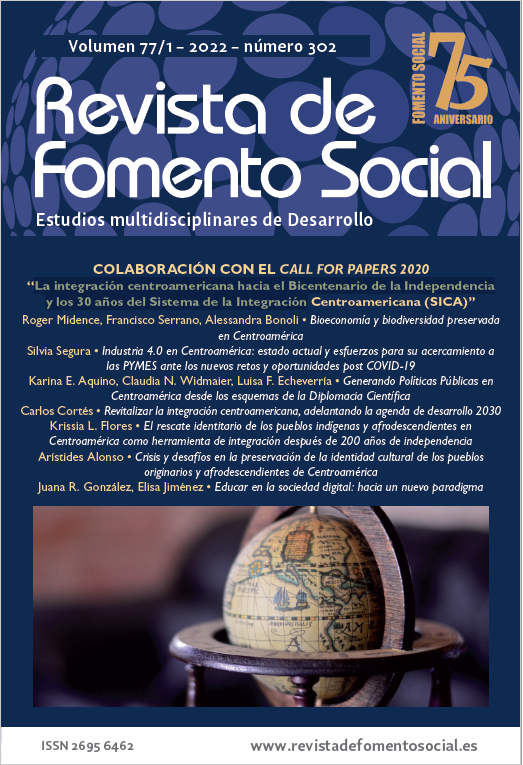
Main Article Content
Abstract
Circular economy and bioeconomy models have turned out to be a global alternative to linear production models that are based on fossil fuels and often rely on non-renewable primary resources. Although initiatives of this type do exist in Central America, mostly in the bioenergy sector, the implementation of such principles must be promoted in a wider range of sectors such as bioremediation, the production of biofertilisers and other higher-value materials such as biopolymers and biocosmetics. Similarly, the preservation of biodiversity must be a common Central American project, fostering synergy that allows SICA to play a neutral rather than passive institutional role, acting as a coordinating nexus between countries. Taking current technologies and the biodiversity potential in Central America into consideration, migrating towards a bio-based, circular economy with a focus on environmental sustainability is a viable route
for the region.
Downloads
Article Details
The authors acknowledge that the Revista de Fomento Social assumes as its own the intellectual property rights over their work and grant the journal the permissions of distribution and public communication of the same established in the Berlin, Bethesda and Budapest declarations; for this reason they accept that the work presented be distributed in open access, protecting the copyright under a "Creative Commons Attribution-NonCommercial-NoDerivativeWorks 4.0 (CC BY-NC-ND) license.

You may copy, use, disseminate, transmit and publicly display provided that:
Cite the authorship of the work, the publication in Revista de Fomento Social, issue, year and the pages where you found the information.
No commercial benefit may be obtained.
No derivative works may be made for commercial purposes that are not authorized by the journal.
Authors are encouraged to disseminate the article electronically (Revista de Fomento Social, number, year, pagination, ISSN, DOI, etc.), in order to favor its circulation and diffusion, increase its citation and reach among the academic community.
The information of the journal will be provided to Dulcinea
References
Andreson, E., Cherrignton, E. A., Sempris, E., & Flores, A. (2008). “Potential Impacts of Climate Change on Biodiversity in Central America, Mexico, and the Dominican Republic. Ciudad de Panamá: CATHALAC / USAID.
Aramendis, R. H., Rodríguez, A. G., & Krieger Merico, L. F. (2018). Contribuciones a un gran impulso ambiental en America Latina y el caribe - Bioeconomía. Santiago: Naciones Unidas.
Bracco, S., Tani, A., Çalıcıoğlu, Ö., Gomez, M. S., & Bogdanski, A. (2019). Indicators to monitor and evaluate the sustainability of Bioeconomy. Roma: FAO.
Chamorro, S. (2015). Acuerdos de Paz de Esquipulas:La construcción de la paz en Centroamérica. Cultura de paz, 28-34.
Comisión Europea. (2015). Cerrar el círculo: un plan de acción de la UE para la economía circular. Bruselas: Unión Europea.
Consejo Alemán de Bioeconomía. (2018). Update Report of National Strategies around the World. Berlín: Office of the Bioeconomy Council.
DE, 2. (2007). En Route to the Knowledge-Based Bio-Economy. Colonia: 2007 DE.
Ellen Macarthur Foundation. (2020). Financing rhe circular economy. Londres: Ellen Macarthur Foundation.
Fava, F., Totaro, G., Diels, L., Reis, M., Duarte, J., Beserra Carioca, O., . . . Sommer, B. (2015). Biowaste biorefinery in Europe: opportunities and research & development needs. New Biotechnology, 100-108.
Fundación Ellen MacArthur. (2015). Hacia una econonomía circular: motivos económicos para una transición acelerada. Londres: Fundación Ellen MacArthur.
Gligo, N., & otros. (2020). La tragedia ambiental de América Latina y el Caribe, Libros de la CEPAL, N° 161. Santiago: CEPAL.
Gobierno de Costa Rica. (2020). Estrategia nacional de bioeconomía - Costa Rica - 2020 - 2030. San José : Ministerio de Ciencia, Tecnología y Telecomunicaciones.
Huete-Pérez, J. A. (2008). Biotecnología para el desarrollo de naciones pequeñas. Encuentro, 89-95.
IICA. (2019). Política Agropecuaria de la Región SICA 2019-2030. San José: IICA.
IICA. (2019). Programa de Bioeconomía y Desarrollo Productivo. San José: IICA.
Marinero Orantes, A. E., Vargas Cañas, J. I., Martínez, L, C. G., Sardiñas Gómez, O. F., & Zúniga González, C. A. (2015). Análisis de la agenda pública y privada de la Bioeconomía en Centroamérica y el Caribe: Estudios de Caso de El Salvador, Honduras, Cuba y Nicaragua. Revista Iberoamericana de Bioeconomia y Cambio Climático, 242-284.
Martinez, G. A., Rebecchi,, S., Decorti, D., Domingos, J. M., Natolino, A., Del Rio, D., . . . Fava, F. (2016). Towards multi-purpose biorefinery platforms for the valorisation of red grape pomace: production of polyphenols, volatile fatty acids,polyhydroxyalkanoates and biogas. Green Chemistry, 261-270.
MINCyT-CIRAD. (2016). Senior Officials Working Group on Bioeconomy. V EU-CELAC. Bruselas. Recuperado el 10 de Agosto de 2020, de http://alcuenet.eu/assets/SOM%20Thematic%20Report-%20Bioeconomy%202016.pdf
Montero Vega, M., & Quirós Madrigal, O. (2017). International Bioeconomy Innovations in Central America. Knowledge-Driven Developments in the Bioeconomy, 83-96.
Motola, V., De Bari, I., Pierro, N., & Giocoli, A. (2018). Bioeconomy and biorefining strategies in the EU Member States and beyond. Roma: ENEA.
Mudd, G. (2010). The Environmental sustainability of mining in Australia: key mega-trends and looming constraints. Resources Policy, 95-115.
Notas informativas: CEPAL. (7 de Agosto de 2020). Obtenido de Comisión economica para America Latina y el Caribe (CEPAL): https://www.cepal.org/es/notas/costa-rica-lanza-estrategia-nacional-bioeconomia
Oficina de publicaciones de la Unión Europea. (2 de Giugno de 2020). Unión Europea. Obtenido de Oficina de publicaciones de la Unión Europea: https://op.europa.eu/es/publication-detail/-/publication/353a22f9-8e69-4dd9-b1cf-db402253e897
Paletta, A., Leal Filho, W., lateef Balogun, A., Foschi, E., & Bonoli, A. (2019). Barriers and challenges to plastics valorisation in the context of a circular economy: Case studies from Italy. Journal of Cleaner Production, 60-71.
Rey Lema, D. M. (2018). Bioética y bioeconomía: disciplinas para supervivencia del mundo planetario. Trilogía Ciencia Tecnología Sociedad. Ciencia, Tecnología y Sociedad, 177-204.
Rodríguez, A. G., & Aramendis, R. H. (2019). El financiamiento de la bioeconomía en América Latina: identificación de fuentes nacionales, regionales y de cooperación internacional. Santiago: Comisión Económica para América Latina y el Caribe (CEPAL).
Rodríguez, A. G., Rodrigues, M., & Sotomayor, O. (2019). Hacia una bioeconomía sostenible en América Latina y el Caribe: elementos para una visión regional. Santiago: Comisión Económica para América Latina y el Caribe (CEPAL).
Sistema Económico Latinoamericano y del Caribe (SELA). (10 de Luglio de 2020). Sistema Económico Latinoamericano y del Caribe (SELA). Obtenido de Sistema Económico Latinoamericano y del Caribe (SELA): http://www.sela.org/media/3217829/el-parlamento-centroamericano-y-la-agenda-2030.pdf
UNEP-WCMC. (2016). El estado de la biodiversidad en América Latina y el Caribe. Cambridge: Programa de las Naciones Unidas para el Medio Ambiente.