
The origins of maternity benefits
Article Sidebar
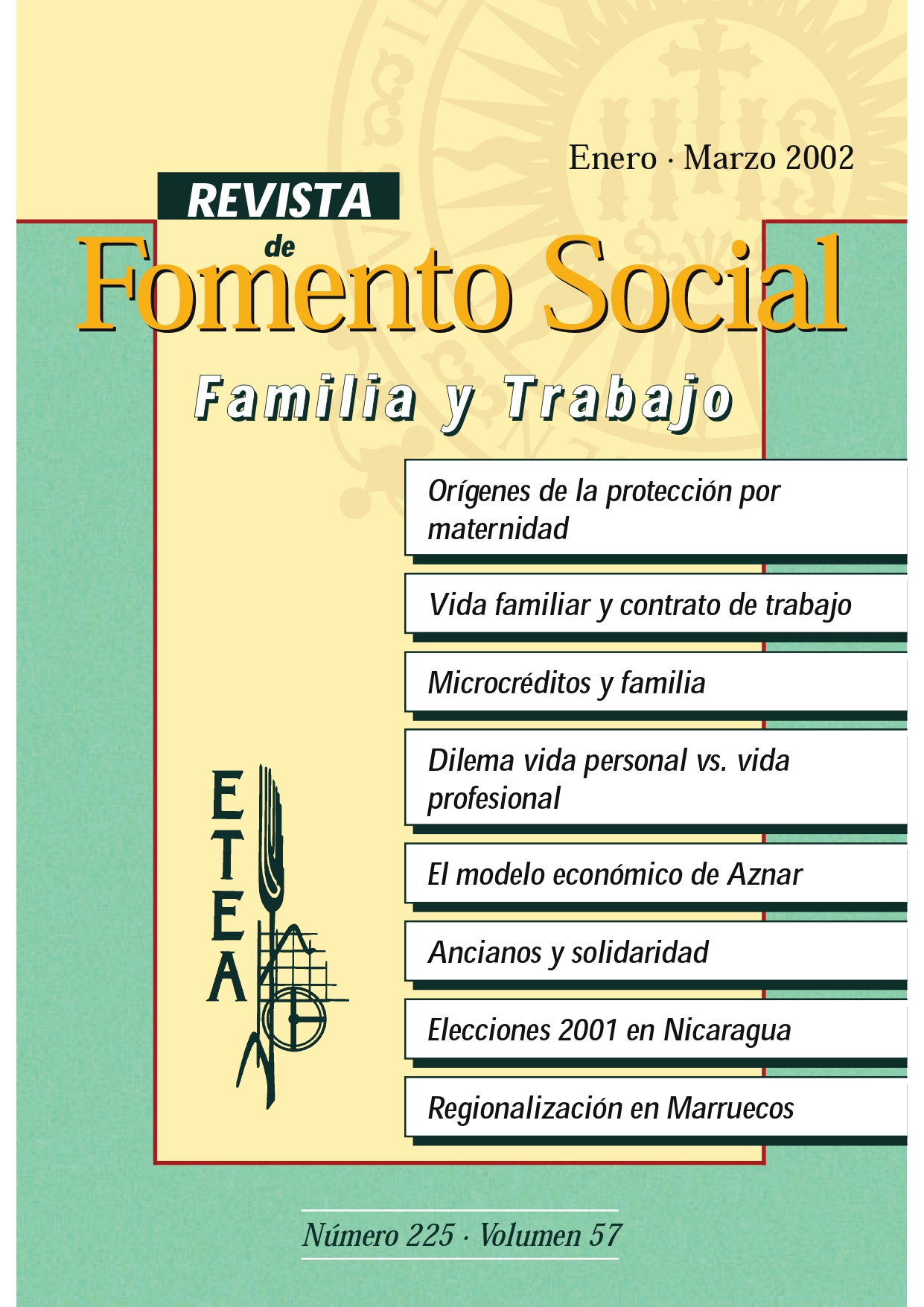
Main Article Content
Abstract
Paid work for women in the final decades of the 19th century and into the twentieth was classed within the framework of labour relations that emerged from the Industrial Revolution, with the aggravating factor that the view held by society at that time with respect to a working woman made her situation even worse on the labour market. At the end of the 19th century strong social rejection was directed at women working; a large part of society thought that a woman’s place was at home. As the twentieth century advanced, society began to tolerate women working but only in situations of need. The atmosphere of political calm in the last decade of the nineteenth century fostered several legal attempts that never managed to materialise. The Bill that Eduardo Dato had sent to the Senate in 1889, strongly criticised in working circles, finally became law on 13 March 1900. This Law, which for the first time recognises the right to maternity leave, characterises it as a true situation of suspension of the job contract, whose basic features are: temporary work inactivity and absence of payment, but the right to return to the job is maintained.
Downloads
Article Details
The authors acknowledge that the Revista de Fomento Social assumes as its own the intellectual property rights over their work and grant the journal the permissions of distribution and public communication of the same established in the Berlin, Bethesda and Budapest declarations; for this reason they accept that the work presented be distributed in open access, protecting the copyright under a "Creative Commons Attribution-NonCommercial-NoDerivativeWorks 4.0 (CC BY-NC-ND) license.

You may copy, use, disseminate, transmit and publicly display provided that:
Cite the authorship of the work, the publication in Revista de Fomento Social, issue, year and the pages where you found the information.
No commercial benefit may be obtained.
No derivative works may be made for commercial purposes that are not authorized by the journal.
Authors are encouraged to disseminate the article electronically (Revista de Fomento Social, number, year, pagination, ISSN, DOI, etc.), in order to favor its circulation and diffusion, increase its citation and reach among the academic community.
The information of the journal will be provided to Dulcinea