
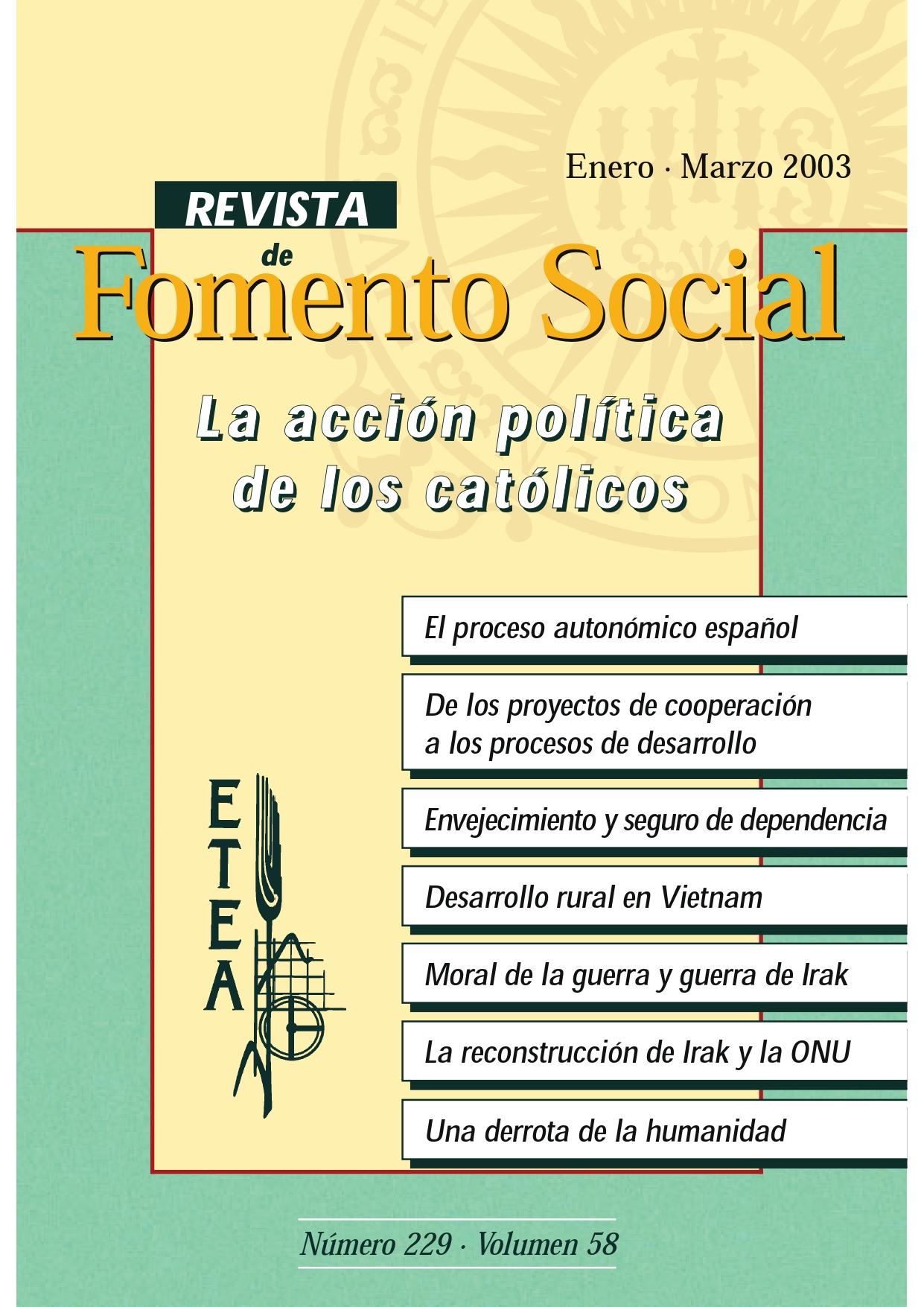
From the regional process towards a net system. (Regions and Autonomous Regions in the dawn of the 21st century)
Article Sidebar
Main Article Content
Abstract
The perception of the Spanish autonomic process is conditional on the inertia of a controversial process that would answer the period of “fight for competences”. This period seems to be coming to an end, and the new perspectives of territorial regulation are facing a new phenomenon: the tendency to emulation and horizontal learning among Autonomous Regions regarding laws, policies and organizational experiences, relatively out of the active role of the central government. It is a tendency that reflects at the same time rising processes of adaptation to the external globalised context whose future development could be a reasonable way out against alternative tendencies of blocking the territorial Spanish process. The new perspectives of the so called “multilevel government” place the territorial map before an interactive process that begins operating like a rising “net system”, designing new future lines for the European regionalism.
Downloads
Article Details
The authors acknowledge that the Revista de Fomento Social assumes as its own the intellectual property rights over their work and grant the journal the permissions of distribution and public communication of the same established in the Berlin, Bethesda and Budapest declarations; for this reason they accept that the work presented be distributed in open access, protecting the copyright under a "Creative Commons Attribution-NonCommercial-NoDerivativeWorks 4.0 (CC BY-NC-ND) license.

You may copy, use, disseminate, transmit and publicly display provided that:
Cite the authorship of the work, the publication in Revista de Fomento Social, issue, year and the pages where you found the information.
No commercial benefit may be obtained.
No derivative works may be made for commercial purposes that are not authorized by the journal.
Authors are encouraged to disseminate the article electronically (Revista de Fomento Social, number, year, pagination, ISSN, DOI, etc.), in order to favor its circulation and diffusion, increase its citation and reach among the academic community.
The information of the journal will be provided to Dulcinea