
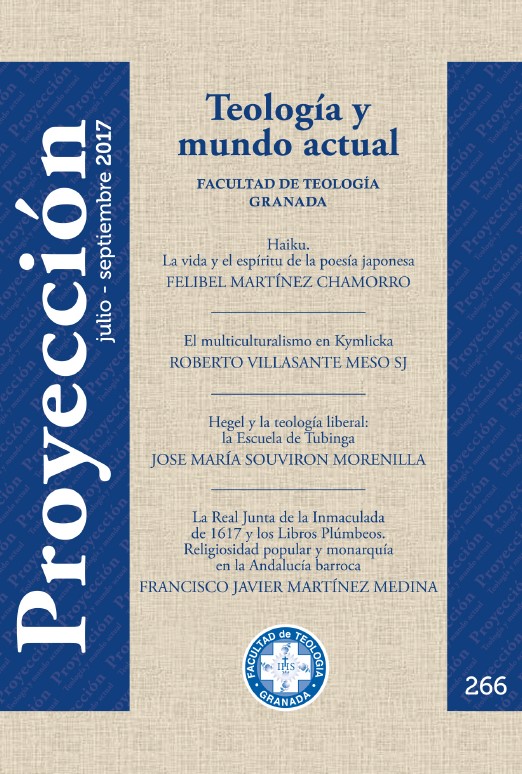
The Royal Meeting of the Immaculate Conception of 1617 and the leaden books. popular religiosity and monarchy in baroque Andalusia
Article Sidebar
Main Article Content
Abstract
The history of the dogma of the Immaculate Conception of Mary is one of the clearest exponents of the devotions born of popular religiosity, which defends these beliefs and gives worship (homage) to the theological disputes and the doubts of the magisterium. In this sense, one of the most unique events was the inventions of the so-called Lead Books (Libros Plúmbeos) in Granada at the end of the 16th century. Among other things they defended that the apostles recognized the Immaculate Conception, although they did it based on texts of the Koran and statements of Mohammed due to the influence of the Moorish Granadians (Moriscos Granadions) descending of the Muslim population. Despite of the obvious contradictions of theologians and numerous Andalusian Catholics, based on these supposed revelations condemned by Rome although supported by the Hispanic monarchy, they obtained the proclamation of a decree of Pope Paul V, in 1617, by which is forbade the defense of The doctrines that denied the Immaculate Conception of the Virgin.
Downloads
Article Details
Previously, the journal was copyrighted. Now, since 2021, the journal publishes under the Creative Commons license.
Authors who publish in Proyección. Teología y Mundo Actual, accept the following conditions:
Authors retain copyright © and grant the journal the right of publication, under Creative Commons Attribution-NonCommercial-NoDerivativeWorks 4.0 (CC BY-NC-ND) license.
You may copy, use, disseminate, transmit, and publicly display provided that:
* Cite authorship of the work, publication in Proyección. Teología y Mundo Actual, number, year and the pages where the information was found.
* No commercial benefit may be obtained.
* No derivative works may be made for commercial purposes that are not authorized by the journal.
Authors are allowed and encouraged to disseminate the article electronically (Proyección. Teología y Mundo Actual, logo or cover of the journal, pagination, indication of the volume and number of the journal, ISSN, DOI, etc.), in order to favor its circulation and diffusion, and to increase its citation and reach among the academic community.